我想收到這篇文章的更新!

2016年10月20日 星期四

實戰課題Medical internship topic 5: Insulin_half life and mixed formula


 Insulin_half life and formula

1. Half life

Dr. József Tőzsér, Dr. Tamás Emri, Dr. Éva Csősz , Dr. József Tőzsér (2011) "Chapter 12. Production of human therapeutic proteins" Protein Biotechnology


2. Insulin formula
UCSF Diabetes Education Online: https://dtc.ucsf.edu/types-of-diabetes/type2/treatment-of-type-2-diabetes/medications-and-therapies/type-2-insulin-rx/designing-an-insulin-regimen/


3. Do not usually treat patients with insulin stimulation oral drugs if the patient is already insulin dependent


Repurposing Drugs to Target the Diabetes Epidemic Turner, Nigel et al. Trends in Pharmacological Sciences , Volume 37 , Issue 5 , 379 - 389


4. Last but not least, treating DM patients with CKD can be difficult.
This is a slide online about treatment in this scenerio.
http://www.slideshare.net/PraveenNagula/management-of-dm-in-ckd-8829991

腎臟科Nephrology random notes 02: Hypokalemia

Hypokalemia

1. K+ pool in body: 3500 mEq l (50 mmol/Kg), extracellular only 60~80 mEq
    Daily intake: 100 mEq

2. K+ balance:
- acute internal balance: transcellular; driving force (inward) including Na/K pump, Na/H exchange, beta 2 agonist, insulin, thyroid hormone
- chronic external balance: renal secretion ; K+ secretion = [K+ ]CCD x Flow rateCCD
- GI: (metabolic acidosis)diarrhea, laxative use, villous adenoma,  (metabolic alkalosis) NG drainage, vomiting

3. Definition 
- K+ <3.5 mEq/L in blood
- does no equal low K+ in sum 

4. Etiologies:
- Uk >30 mEq/ day, >15 mEq/L, TTKG>7 --> renal loss--> check BP, acid-base, Ucl
- Uk <25 mEq/ day, <15 mEq/L, TTKG<3 -->extrarenal loss
TTKG= (urine/plasma [K+ ])/(urine/plasma osmolality)

5.  Common manifestations
- Mild to moderate= 2.5~3.5 mEq, usually asymptomatic
- Arrhythmia ( U wave, QT interval↑, PVCs, VT, VF)
- Muscle cramps and weakness
- Polyuria
- n/v, ileus
- tendon reflex↓

6. Treatment
Lin SH, Halperin ML. Hypokalemia: a practical approach to diagnosis and its genetic basis. Curr Med Chem 2007; 14: 1551-65.
Kunin AS, Surawicz B, Sim EA. Decrease in serum potassium concentrations and appearance of cardiac arrhythmias during infusion of potassium with glucose in potassium-depleted patients. N Engl J Med 1962; 266: 228-33


↓ 1 mEq= 200 mEq total body loss
K+ 2.5~3.5 mEq↓: oral slow-K 40~100 mEq/day, no more than 20 mEq in one dose
K+ 2.5 mEq↓: IV K+ supplement, do not give over 40 mmol/L or 60 mmol/hour
Peripheral line: 20 mEq/L(max 40), 10 mEq/hr
Central line: 40 mEq/L(max 100), 20 mEq/hr~40mEq/hr

IV: DO NOT mix with dextrose solution metabolic acidosis:  use KHCO3, K+ citrate
metabolic alkalosis: use KCl
low phosphorous: use K+ phosphate

Potassium sparing diuretics: 
- amiloride
- triamterene
- spironolactone #1 BID or #2 QD with loop diuretics #1?

2016年10月18日 星期二

腎臟科Nephrology random notes 01

Nephrology random notes 01


1. Blood cells
- Hgb: RBC can remove NO in blood--> RBC infusion can elevate blood pressure
- Platelet decrease: cause-->drug?, infection? DIC? hematologic disease? autoimmune?

2. UTI
Urine analysis
           - pyuria+bacteriuria + symptoms?
           - no need to treat asymptomatic UTI in women except pregnant women 
           - check renal echo if UTI in men
           - Treatment:
                   *quinolone and Baktar not first line--> 
                    drug resistance carried by plasmids, save these drugs for MDR-TB; 
                   *Ceftriaxone has IM form for those who can not stay in the hospital for IV antibiotics
                   * yeast and candida--> can be viewed as normal colonies
                   * Proteus: may be related to stones

3. Proteinuria
- A/C ratio: DM, HTN patients wound check this.
- P/C ratio: generalized protein loss

4. BUN/Cr↑ (pre-renal azotemia) causes
- Breakdown: GI bleeding (RBC), trauma
- Sepsis
- High protein diet
- Steroid use

BUN↓ : may be related to liver function ↓

5. Oliguria----->AKI?
- Pre-renal: try hydration, but beware of heart, kidney, liver function, allergy
- Post-renal: try Foley tube insertion, DDx: stone, malignancy, BPH
- Renal: drug induced? use lasix

6. Skin turgor evaluation spots
- Axillary region
- Inguinal region

7. Diet and CKD in Taiwan
- Avoid: carambole , kiwi fruit, melons, papayas, brown rice, anchovy, salty soup

8.Shortness of breath
- Hypoxia: A/a gradient abnormal, ex. pulmonary edema(CO2 more soluable than O2)
- CO2 retention with muscle fatigue, ex. asthma, COPD

9. ABG/VBG in SOB patients with CKD
- Do not count anion gap because we still cannot differentiate whether metabolic acidosis is caused by infection or renal diseases
- RTA narrowly defined: RTA with normal Cr.

10.  Dialysis
- lung edema: refractory to diuretics
- pericarditis
-K+↑, EKG change(+), fail medical treatment (Cr high-->protect heeart, may not have EKG abnormality; can double-check K+ level if doubting hemolysis) 
- Uremia
- Intoxication: Ca2+, acylovir,aminophylline ,Benzodiazepam(x), with smaller molecular and less protein binding ability
- Elective: acidosis, anemia
- Uremic encephalopathy diagnosed by rule out, DDx: CVA, stroke, sepsis (BP drop after dialysis!)
High Cr without symptoms: This is a strong person ! XD

11. Spider angioma
- Estrogen↑ --> central arteriole, peripheral capillaries--> on liver cirrhosis 

12. Else
-  Imipenem: may induce seizure
-  Cardiac echo: IVS--> septum thickness, LVPW--> left ventricle thickness, concentric hypertrophy--> HTN related

2016年10月15日 星期六

感染科Infectious diseases topic two: Antibiotics and bacteria


Antibiotics and bacteria

(Should consult professional advice because every doctor has his/her own perspective regarding antibiotic use.)

File:Antibiotics Mechanisms of action.png
Author: Kendrick Johnson
1. Antibiotics and drug resistance
- mechanism: bacterial pump(1/10 of bac. genome coding for pumps); collateral damage caused by wide spectrum antibiotics and subsequent selection of resistant colonies
-  hospital monitoring:  Most bac. are sensitive to amikacin, but beware of renal toxicity); other indicators of resistance: ciprofloxacin, levofloxacin etc.
- example: E. coli resistance development(ampicillin-->cefazolin-->ceftriaxone-->carbapenem-->colistin)

2. Bacteria review
 GPC(Staphylococcus, Streptococcus, Enterococcus)
         Staphylococcus
        - coagulase (+): S. aureus
        - coagulase (-): other Staphylo
 GPB(Listeria, Bacillus, Clostridium)
 GNC(Neisseria)
 GNB(Enterobacteriaceae, NFGNB, Haemophilus)
                                           NFGNB(live on little amount of sugar)
                                           - Pseudomonas
                                           - Acinetobacter baumanii
                                           - Stenotrophomonas maltophilia 
                                              - Burkholderia
                                              - Moraxella catarrhalis
                     
3. Antibiotics categories
- Main force: cell wall inhibitors
- Assistance: protein inhibitors
- Second line: quinolone, rifampin
- Killers: Daptomycin (sounds effective but cannot kill intracellular pathogens)

4. Drug of choice( Newer drug isn't always better _)

- Syphilis, Spirochetes, Strep. group A: Penicillin G

- MSSA cellulitis: Oxacillin
- Enteroccocus: resistant to all cepha, use Penicillin G or Ampicillin
- MRSA: Vancomycin (but Vanco has poor CNS penetration)

- Infective endocarditis: Penicillin G 3-4 MU IV Q4H +Gentamicin 1mg/kg Q8H  for 4-6wks

-VRE: Ampicillin +Gentamicin (if sensitive), Linezolid(ZYVOX), Daptomycin
- Uncomplicated sinusitis, pharyngitis, otitis media: Amoxicillin(250-1000mg PO Q8H)
- Neonatal E. Coli infection/Adult Listeria meningitis: Ampicillin(1-3g IV Q4H-Q6H for Listeria)
- Respiratory tract infection: AUGMENTIN(Amoxicillin +Clavulanate),  UNASYN(Ampicillin +Sulbactam), sulbactam--> Acinetobacter baumannii

- Klebsiella pneumonia: Cephalosporins(3rd if community invasive infection) + aminoglycosides
- Enteric bacilli with ESBL: resistance to 3rd cephalosporins; use Imipenem or MeropenemCiprofloxacin
- Salmonella: Should not be treated with aminoglycosides, 1st- or 2nd- generation cephalosporins or imipenem, use 3rd cephalosporins, Quinolone, and TMP-SMZ, Ampicillin, Chloramphenicol if (S)

- Pseudomonas infection(HAP?): TAZOCIN

- Pseudomonas: aminoglycoside(UTI), Ceftazidime+aminoglycoside(pneumonia and/or bacteremia), ciprofloxacin/levofloxacin

Stenotrophomonas infection: TMP-SMZTIMENTIN,  Levofloxacin 

                                                              (ticarcillin +clavulanate)
- Acinetobacter baumannii: ceftazidime, imipenem or meropenem; colistin+carbapenem or sulbactam

5. ß-Lactam antibiotics

- Penicillin, Cephem(Cephalosporin/Cephamycin), Monobactam, Carbapenem, ß-lactamase inhibitor

Penicillins

- Recite!  
                  Ampicillin + Sulbactam = Unasyn (MSSA, Acinetobacter, bacteroides)
                  Amoxicillin + Clavulanic acid = Augmentin
                  Ticarcillin + Clavulanic acid = Timentin
                  Piperacillin + Tazobactam = Tazocin
Cephems
-First-generation cephem
Cefazolin (IV)
Cephalexin (oral)

-Second-generation cephem

Cefuroxime (IV, oral)
Cefoxitin, cefmetazole (IV cephamycin)

-Third-generation cephem

Without antipseudomonal activity: Ceftazidime, Cefoperazone
With antipseudomonal activity: Cefotaxime, ceftriaxone (IV); Cefixime, cefpodoxime (oral)

-Fourth-generation cephem

Cefepime
Cefpirome

Carbapenems : for ESBL, anaerobics

- Imipenem
- Meropenem
- Ertapenem: NOT for pseudomonas, AB

Fluoroquinolones: CAN cover AB, Salmonella, Shigella, atypical, anaerobics, resistance strains, STD(gonorrhea)

- 2nd generation Ciprofloaxin (Cirpoxin): GNB, NFGNB
- 3rd generation Levofloxacin (Cravit), Moxifloxacin (Avelox)

Aminoglycosides: seldom used alone if G(+)

- Gentamycin
- Amikacin
- Recite!
                    Infective endocarditis: Penicillin G + gentamicin  
                    Enterococcus infection: Ampicillin + gentamicin
                    Staphylococcus infection: Oxacillin + gentamicin/ Vancomycin + gentamicin
Macrolides: MRSA, S. pneumonia, atypical
- Erythromycin
- Clarithromycin
- Azithromycin

SMX-TMP

- simple UTI
- PCP
- salmonella; traveler's diarrhea
- Steno/Burkholderia/Chryseo

Tetracycline (Mycoplasma, Chlamydia, Rickettsia)

-   Tetracycline: Q6H
    Minocycline: Q12H
    Doxycycline: Q24H
-   Tigercycline

Others

- Metronidazole: amoeba, Clostridium difficle
- Clindamycin: for G(+), alternative
- Chloramphenicol
- Colistin: multiple drug resistant G(-)

2016年10月4日 星期二

感染科 Infectious diseases topic one: NTM (nontuberculous mycobacteria)

NTM

1. Pathogen types

- Rapid growing: abscessus
- Soft tissue related: marinum
- Immunocompromised pts: kanasii

2. Pathogen from...

- Aquarium, fish: marinum
- Tap water: gordonae

3. Body parts involved
- LN: by MAC
- Soft tissue:  by marinum
- Lung: AFP(+), PCR(-), CT may present with TB-like patterns(tree in bud, LNs)
- Disseminated: beware of AIDS, interferon gamma pathway defect

4. Examination
- Use LJ culture with liquid
- Take samples from sputum, bronchial washing, soft tissue, blood

5. Diagnosis by
- Clinical symptoms
- Image proof
- Pathology or culture
*** Fungal infection of lung can also last long.

6.  Sweet's syndrome
- Epidemiology: rare
- Presentation: fever, painful skin lesions on arms, neck, head, and trunk
- Etiology: infection(ex:NTM), cancer, drug

7. Treatment
- Principle: treat early even with only one set of blood culture done
- Kanasii: treat as TB, except PZD(Pyrazinamide)
- MAC: macrolide with other drugs combined

8. Take home message:
Consider NTM infection if wounds do not heal for a long time
***Further reading: https://www.ncbi.nlm.nih.gov/pubmed/27109150

2016年8月23日 星期二

實戰課題Medical internship topic 4: Diabetes mellitus ADA guideline

Diabetes mellitus ADA guideline(2016)

1. DM types: type 1, type 2, GDM, MODY
2. Diagnosis
Diabetes Care Volume 39, Supplement 1, January 2016
3. Evaluation/Prevention
-- To test for prediabetes, fasting plasma glucose, 2-h plasma glucose after 75-g oral glucose tolerance test, and A1C are equally appropriate.
-- For all patients, testing should begin at age 45 years. (repeat every 3 years)

4. Management for type 1 DM
-- Multiple-dose insulin injections (three to four injections per day of basal and prandial insulin) or CSII therapy(Continuous Subcutaneous Insulin Infusion)

5. Management for type 2 DM
-- first line: Metformin
-- insulin use: if newly diagnosed and markedly symptomatic and/or elevated blood glucose levels or A1C
-- add therapy if: goal failed after 3 months

6.  Drugs
Diabetes Care Volume 39, Supplement 1, January 2016
7. Mixed therapy
-- Noninsulin agents may be continued, although sulfonylureas, DPP-4 inhibitors, and GLP-1 receptor agonists are typically stopped once more complex insulin regimens beyond basal are used
-- Regular human insulin and human NPH-Regular premixed formulations (70/30) are less costly alternatives to rapid-acting insulin analogs and premixed insulin analogs, respectively, but their pharmacodynamic profiles make them suboptimal to cover postprandial glucose excursions

2016年8月19日 星期五

實戰課題Medical Internship topic 3: Hypertension guideline in Taiwan


Hypertension guideline in Taiwan

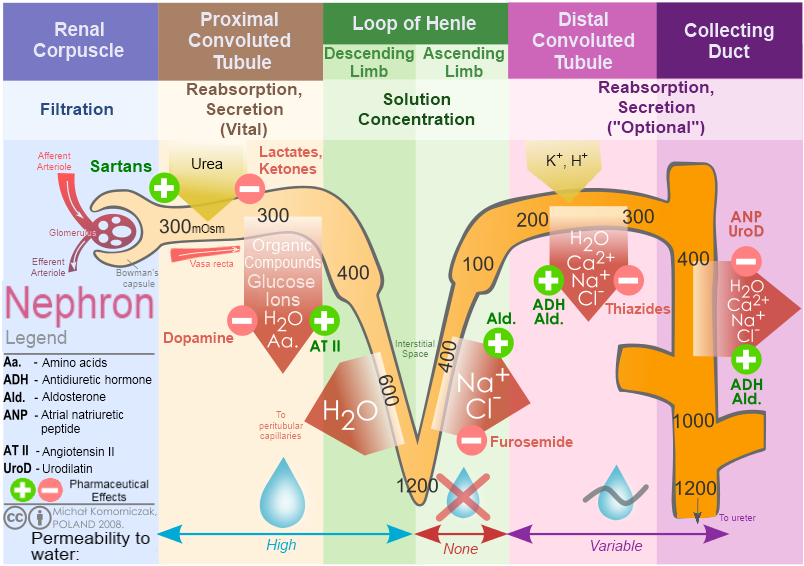
https://commons.wikimedia.org/wiki/File%3AKidney_nephron_molar_transport_diagram.png

All of the information collected below is from 2015 Guidelines of the Taiwan Society of Cardiology and the Taiwan Hypertension Society for the Management of Hypertension

"We disagreed with the ESH/ESH joint hypertension guidelines suggestion to loosen BP targets to <140/90 mmHg for all patients."
"We strongly disagree with the suggestion by the 2014 JNC report to raise the BP target to <150/90 mmHg for patients between 60-80 years of age. "

1.  For patients with diabetes, CHD, chronic kidney disease who have proteinuria, and those who are receiving antithrombotic therapy for stroke prevention, we propose BP targets of <130/80 mmHg in our guidelines.

2.  BP targets are <140/90 mmHg for all other patient groups, except for patients 80 years of age in whom a BP target of <150/90 mmHg would be optimal.

3. Lifestyle change for HTN patients: S-ABCDE
S- Sodium restriction, low salt but not no salt, <2.0 gram/day may be harmful
A- Alcohol limitation
B- Body weight reduction
C- Cigarette smoke cessation
D- Diet adaptation
E- Exercise adoption

4. Drug therapy, consider PROCEED
P- Previous experience
R- Risk factors
O- Organ damage
C- Contraindications
E- Expert's or doctor's judgment
E- Expenses or cost
D- Delivery and compliance

5. Rule of 10 & Rule of 5
"With a standard dose of any one of the 5 major classes of anti-hypertensive agents, one can anticipate approximately a 10-mmHg decrease in systolic BP (SBP) (Rule of 10) and a 5-mmHg decrease in diastolic BP (DBP) (Rule of 5). [...], when 2 drugs with different mechanisms are to be taken together, the decrease in BP is the sum of the decrease of the individual agents (approximately 20 mmHg in SBP and 10 mmHg in DBP). "

"When doses of the same drug are doubled, there is only a 2-mmHg incremental decrease in SBP and a 1-mmHg incremental decrease in DBP."

6. Adjustment algorithm: AT GOALs
A- Adherence
T- Timing of administration
G- Greater doses
O- Other classes of drugs
A- Alternative combination or SPC(single pill combination)
L- LSM(life style modification) + Laboratory tests

7. Initiation of drug therapy
Condition: HTN stage 1, after 3 months of LSM but fail to reach the goal
Special cases: "[...]diuretics and beta-blockers should not be considered as first-line therapy in patients with metabolic syndrome or glucose intolerance, unless strongly indicated or used as an add-on therapy to reach target.

8. Timing of administration
"Morning administration of antihypertensive drugs was routinely performed in the past. However, it has been recently more common to switch to a bedtime administration.[...]The nighttime BP was more effectively decreased by bedtime administration of drugs. More importantly, asleep BP was the most significant predictor of event-free survival."
-- safe and effective choices: ACE inhibitors, ARB, or CCB

9. Goal
"[...]appropriate to control BP to targets at 3 months, and preferably within 1 month, for high-risk patients."

10. Thiazides
-- merits: ↓CHD, ↓heart failure, adding low dose-->effective when BP cannot be controlled with ACE inhibitors or ARBs, more effective on OB patients?
-- demerits: hypokalemia (not corrected with Triamterene), hyponatremia, metabolic effects
(A dose more than 25 mg/d of hydrochlorothiazide is considered to be a high dose and is associated with a significant increase in side effects including metabolic derangement.)
-- Chlorthalidone might be preferred compared to hydrochlorothiazide ???

11. Aldosterone antagonists
-- merits: beneficial for primary aldosteronism, resistant hypertension, prior CV events?(systolic, but no preserved ejection fraction)
"Treatment-resistant hypertension is defined in a recent review as high BP ( 140/90 mmHg), resistant to a treatment regimen that includes proper lifestyle modification plus a diuretic and two other antihypertensive agents of different classes at their optimal doses."
--demerits: hyperkalemia, rapid reduction of eGFR

12. Loop diuretics
-- merits: good for edema(+), CKD, CHF 
-- demerits: not as effective in lowering BP

13. Other potassium sparing diuretics
-- demerits: not as effective in lowering BP

14. Beta-blockers
-- merits: good for CHD, MI, HR↑
-- demerits: increase stroke if pt's without CHD? Only in the elderly ( 60 years), atenolol was inferior to other drugs in reducing stroke? reduced sexual function, fatigue, reduced exercise capacity, and body weight increase, newly onset diabetes(with diuretics!) ; contraindication(both selelctive and non-selective)--> asthma

15. Calcium channel blockers
 Dihydropyridine (DHP)
-- merits: ↓stroke,
-- demerits: less effective in ↓HF, peripheral edema,
Non-dihydropyridine (non-DHP)
-- demerits: less potent than DHP groups, more negatively chronotropic and inotropic, metabolized by CYP3A4

16. Angiotensin converting enzyme inhibitors
-- merits: pre-hypertension,  preferentially indicated in patients with HF/diabetes/CKD
-- demerits: cough and angioedema

17. Angiotensin receptor blockers
-- merits: tolerability↑ discontinuation↓
-- demerits:  should not be combined with ACE inhibitors (renal impairment)

18. Direct renin inhibitors (aliskiren)
-- safely combined with hydrochlorothiazide or amlodipine in the elderly (age 65 years) with stage 1 hypertension
-- demerits: hyperkalemia, hypotension and renal impairment if combined with ACEI or ARB

19. Other drugs(not first line)
-- alpha blockers(Doxazosin): treat resistant HTN/BPH
-- clonidine, alpha-methyldopa
-- hydralazine, minoxidil: cause fluid retention and tachycardia, hemolytic anemia, vasculitis, glomerulonephritis, and a lupus-like syndrome; (+)isosorbide dinitrate(Imdur)-->effective for African-American symptomatic HF 
-- LCZ 696: dual-acting angiotensin receptor-neprilysin inhibitor (ARNI)

20. Combination

Early combination is suggested!
Preferred: A+C. A+D; B+C; R+C, R+D; A+C+D 
Not recommended: B+D, A+R, A/R+DRI

***Recommendation*** 
1. Med Data Speaks
This is a website arranging data concerning oral antihypertensive drugs

https://meddataspeaks.wordpress.com/2015/11/29/%E8%87%A8%E5%BA%8A%E8%97%A5%E5%AD%B8-%E9%AB%98%E8%A1%80%E5%A3%93%E5%8F%A3%E6%9C%8D%E8%97%A5%E7%89%A9%E7%B8%BD%E6%95%B4%E7%90%86/

2. JNC 7(comorbidities and drug choice, not detailed): 
https://s3.amazonaws.com/hcplive/n_media/image3/card-8-25-09.JPG

3. JNC 8(initial dose of drugs)
http://www.measureuppressuredown.com/HCProf/Find/BPs/JNC8/specialCommunication.pdf


ICU BOOK CH12小抄

膠質液與晶質液的復甦治療 Ringer's solution -避免與pRBC一起輸注 -Ringer's Lactate:電中性鹽溶液 -Ringer's Acetate:用於肝臟病患 D5W -D5W使細胞腫脹,且當血液循環受阻,將造成...