我想收到這篇文章的更新!

顯示具有 clerk 標籤的文章。 顯示所有文章

2016年7月19日 星期二

小兒科雜記Pediatrics topic 1: Unconjugated hyperbilirubinemia in the newborn

Unconjugated hyperbilirubinemia in the newborn

0. Metabolism process review
-- Heme-->[heme oxygenase]-->biliverdin-->[biliverdin reductase]-->bilirubin-->[UGT1A1]-->conjugated bilirubin-->[beta-glucuronidase]-->unconjugated bilirubin

1. Total bilirubin:
-- usually > 1mg/dL

               # hematocrit 50~60% (more RBC)
               # shorter life span of RBC (85 days)
               # deficient UGT1A1

               # increased enterohepatic circulation

-- can reach 10~14 mg/dL @ 3~5 days old (East-Asians) 
-- resolves within the first one to two weeks after birth
-- >25 mg/dL:  bilirubin-induced neurologic dysfunction (BIND)--> kernicterus


2. Neonatal hyperbilirubinemia (>35 wks)
-- check hour-specific Bhutani nomogram: >95th percentile
-- severe if
             # appear at first 24 hrs
             #  >95th percentile
             # 0.2 mg/dL ↑ per hour
             # after 2 weeks
             # conjugated >1 mg/dL or >20 percent

3. Breast milk jaundice
-- >5 mg/dL for several weeks (max. 12 wks)
-- etiology: some unknown factor in milk promoting enterohepatic circulation

4. Breast feeding failure jaundice
-- combined with low output (urine+stool), hypovolemia, weight loss


2016年6月6日 星期一

小兒科topic four: stroke at young age

Stroke at young age

1. Stroke at young age: <45 y/o

2. Stroke is divided into two categories:
--hemorrhagic 
--ischemic (80%)
Key point: Need more strict fluid control in hemorrhagic pts
                Rule out ICH before lysis
                Rule out complex migraine with hemiparesis (rare but possible!)

3. Initial assessment:
FAST : face, arm, speech, time

First 10 minutes
-- ABCDE O2, monitor, IV (just like what we usually do in the ER)

    As for monitors, we may find AF via ECG, and may find aortic dissection with stoke-         like symptoms via CXR.

    As for IV, we may draw blood to check CBC, coagulation(before lysis), Cr(before contrast medium used), electrolytes/cardiac enzyme/glucose for DDx of cause.

-- history
-- PE (neurologic examinations)

First 25 minutes
-- CT scan to differentiate between hemorrhagic and ischemic stroke
-- Check the NIHSS 

First 45 minutes
-- CT report read

 3 hours after onset
-- Thrombolysis IV (0.9mg/kg, max:90mg, 10% bolus over 1 min, rest over 1 h)
However, children under 18 are usually NOT commended to receive thrombolytic therapy.

@ward
--  check consciousness, bilateral pupils, hemorrhagic signs( even if originally ischemic)
-- recurrent stroke within 2~4 wks
-- pneumonia , UTI, DVT
-- check underlying cause of the stoke
-- MRI
-- may transfer to other wards after 3 days with stable conditions

4. Those who cannot receive tPA:
-- aspirin 325 mg STAT

5. Special factors contributing to stroke at young age
-- MELAS( mitochondria, encephalopathy, lactate acidosis, stroke)
-- protein S, protein C, antithrombin, homocysteine, moyamoya
-- virus induced vasculitis
-- AIR: lupus coagulants, ANA
-- sickle cell disease
-- patent foramen ovale
-- Fabry disease

6. Treatment after 24 hrs 
-- aspirin 100 mg QD
-- dipyrimadole 25 mg TID
-- clopidogrel if old-aged, 75 mg QD

7. BP control
-- 185/110 before lysis, 220/120 after treatment (use labetalo= TRANDATE if HTN)

8. Random talk: ICH common spots
-- putamen
-- cerebellum
-- thalamus
-- subcortical region
-- pons

小兒科topic three: SLE and children

SLE and children

The following notes are simplified for quick review. If there are mistakes, please comment and point out!

1. Initial presentation: 
-- adults: rash
-- children: arthritis, nephropathy, ITP, diarrhea, seizure, psychosis 

2. Diagnosis
-- by clinical presentation 
-- by lab data

***clinical presentation***
--Mucocutaneous: skin, mouth, nasopharynx
--Musculoskeletal: joint
--Heart/lung: serositis
--Kidney: proteinuria>500 mg/dl or 3+
--Neuro: seizure, psychosis
--GI
--Hema: hemolytic anemia, WBC<4000, lymphocyte<1500, plt<100000
--AIR

***lab data***
--ANA: for diagnosis, not for long-term F/U
--ds-DNA

For high risk pts:
--anti-Sm
--anti-SSA. anti-SSB, ribonucleoprotein(U1-RNP)

--antiphospolipid: anti-cardiolipin, lupus anticoagulant,  beta-2 glycoprotein antibody 

May be (+) for ANA(-):
--anti-Ro
--anti-La

Others:
--anti-histone
--mixed Coomb's test: coagulation↓--> antibody(+); coagulation normal --> coagulation factors deficiency

3. Pregnancy and SLE
-- The mother:
                        higher spontaneous abortion possibility, 
                        check antiphospolipid, 
                        cannot use Cellcept (MMF)
--The child:
                        check anti-SSA/SSB for SLE risk if the mother has SLE
                        may lead to permenant heart block

4. Biopsy's role: for prognosis, before taking aggressive treatments( If the damage has become irreversible, there's no much need for aggressive treatment. )

5. Lupus nephritis


6. Drugs for SLE
--HCQ(hydroxychloroquine): ex. Plaquenil, for flare up, arthritis
--Corticosteroids: low dose for arthritis, high dose for major diseases
-- MTX: for rash, arthritis
--Belimumab: for rash , arthritis

--CYC(cyclophosphamide): for severe nephritis(type 4),  CNS 
--MMF(Mycophenolate): for nephritis
--CsA(cyclosporine): for renal disease

--Rituximab: for refractory SLE, ITP, AIHA
--ACEI, NSAID

7. Prognosis :
--Worse if course beginning at youth
--Renal failure, infections are major causes of morbidity and mortality

2016年6月2日 星期四

小兒科day three雜記

Pediatrics 小兒科day three  notes

Now there are some young patients with CKD in our department...So review some Nephrology!

1. Causes of high anion gap acidosis?

MUD PILES
-- Methanol
-- Uremia
-- Diabetes ketoacidosis
-- Propylene glycol
-- Infection, INH ( isoniazide )
-- Lactate acidosis( ex. Metformin may induce this!)
-- Ethylene glycol , Ethanol( leading to lactate acidosis?)
-- Salicylates

For Chinese users, we can use this mnemonic: 甲醇乙醇丙二醇;尿素乳酸水楊酸;DM/Infection/INH另外記

2. Causes of decreased anion gap acidosis?

USED CARP; If you cannot remember all, just remember these two: 
-- GI loss of bicarbonate
-- RTA

3. After long-term dialysis

-- EPS=  encapsulating peritoneal sclerosis; irreversible and associated with poor outcome

4. After kidney transplantation

-- OPD F/U: creatinine, drug concentration, fever; DDx: infection or rejection
-- Final tool: biopsy
-- Rejection: B cell type -->  use plasmapheresis, Rituximab
                     T cell type --> use immunosuppresants

5. Continue with previous notes on UTI

-- HPF: 6~10 WBC↑, suspect UTI
-- if orange urine--> more likely to be crystals instead of blood
-- Infection--> pyuria, not just bacteria in the urine
-- APN may last a few days without response to antibiotics.

6. Hemophagocytic syndrome (HLH)

-- Pancytopenia in the blood, Histiocytosis in the bone marrow
-- Fever

7. Pediatric IDA

-- Around 1 y/o, High Hgb is common in normal newborns (15~16 mg/dl)
-- Breast feeding: potential iron insufficiency

小兒科topic two: Abusive head trauma (AHT)

 Abusive head trauma (AHT)

1. Used to be called "shaken baby syndrome"
-- 80% due to physical abuse, therefore changed the name to AHT
-- Not likely to result from mild shakes or falling down from a short table by himself/herself

2. Patients: usually < 1 y/o, being abused many times

3. Prognosis: mortality 13~30%, handicapped 50~70%

4. Warning signs: 
-- Parents giving confusing information; especially young parents with financial stress
-- Burns, wounds (30~70%)
-- Seizure (40~70%)
-- Retinal hemorrhage (65~95%)

5. DDx:
-- Infection
-- Coagulopathy
-- Congenital defects
-- Accidental SDH (seizure/retinal hemorrhage-->uncommon, skull fracture-->more common)

6. Treatment:
-- Educate the parents
-- Drain CSF if high intracranial pressure (not doing this to remove blood clots!); 
   use EVD (external ventricular drainage) 
   or ETV (endoscopic third ventriculostomy) 
   or S-P shunt

7. High intracranial pressure: Cushing triad
-- Hypertension
-- Bradycardia
-- Irregular breathing
For babies, we can evaluate the anterior fontanelle to see if there's bulging due to high intracranial pressure.

8. CSF review:
-- Production: Choroid plexus in lateral ventricle 90%, 3rd and 4th ventricle 5%
-- Reabsorption: Luschka foramen *2, Magendie foramen*1

Amount: total 600~700 ml per day
Pressure: 9~18 mmH2O
Passage: Monro's foramen, Aqueduct 

小兒科day two雜記

Pediatrics 小兒科day two雜記

1. How to estimate the target height of a kid?

boy: (father's height+mother's height +12)/2 
girl: (father's height+mother's height -12)/2 

2. Precocious puberty for Caucasians

boy: <9, testis, pubic hair
girl: <8, breast, MC, pubic hair

pubic hair growth: pubarche
breast budding: thelarche

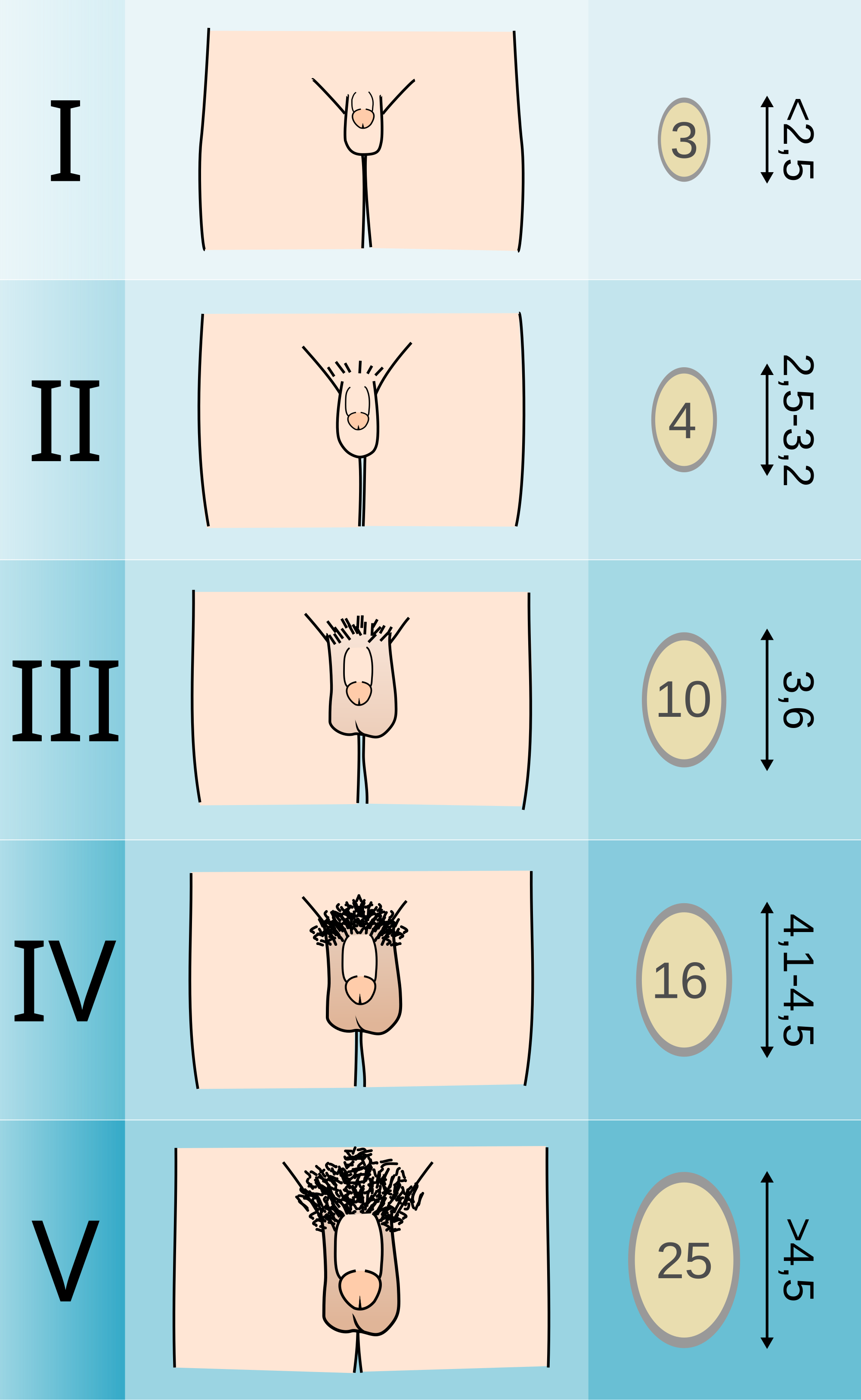
Tanner score
 

3. Pediatric asthma attack

-- IM epinepherine
-- IV hydrocortisol
-- Inhale Ventolin (fast!)

4. VACTERL 

Vertebral defects
Anal atresia
Cardiac defects
Tracheo-esophageal fistula
Renal anomalies
Limb abnormalities

5. Causes of conscious change

A-- Alcohol, anemia
E-- Electrolyte imbalance
I--  Insulin
O-- Opiates, oxygen
U-- Uremia

T-- Trauma, temperature, tumor
I--  Infection, inflammation
P-- Psychogenic
S-- Seizure, stroke

When applied on kids, mind trauma and encephalopathy(ex. anti-NMDA receptor encephalitis) 

5. Catatonia: Over 3 points(+) among 12 symptoms

Symptoms--
Catalepsy, Waxy flexibility, Stupor, Agitation, Mutism, Negativism, Posturing, Mannerism, Stereotypes, Grimace, Echolalia, Echopraxia

Treatment--
BZDs

6. CKD complications

-- anemia
-- secondary hyperparathyroidism
-- shorter stature and lagging development

7. Post-transplantation(kidney) graft dysfunction

-- within 1 wk (after transplantation): rejection
-- within 1~12 wks :                            drug-related= CIN(ex. Tacrolimus)
-- within 3 months:                             chronic change, unknown causes

8. RTA (acidosis without gap)

--type 1: distal tubules, low K+, FeHCO3- <3. calcinosis; ex. Fanconi's syndrome, SSr, RA, SLE
--type 2: proximal tubules, low K+, FeHCO3- >15; ex. SLE, MM, WM
--type 4: RAS system down, high K+, FeHCO3- <3; ex. DM

9. JOUBURT syndrome

--  absence or underdevelopment of the cerebellar vermis

10. Febrile convulsion

-- More commin during 6 months ~ 5 y/o
-- Fever, generalized/symmetrical seizure; may use antipyretic when >38‘C
-- Symptoms relieved after several minutes (shorter than real seizures)
-- Do not have frequent recurrent episodes
-- DDx: seizure, trauma-induced, brain lesions, meningitis

11. Acytelcysteine indications

--  CIAKI : 1200mg BID (doubled!)
--  Expectorants
--  NAC intoxication

12. Trental (Pentoxyfylline) indications

--  PAOD
--  DM nephropathy
--  AIH???

13. Advanced glycation end-product

--proteins or lipids that become glycated as a result of exposure to sugars

14. Trenckhoff tube: two cuffs, for PPD

15. ESRD common causes in children

--  congenital defects 
--  UVR
--  GN( FSGN)

Relative rare causes: chemotherapy( cisplatin ), SLE

2016年6月1日 星期三

小兒科topic one: AKI

Topic One: 小兒AKI

1. AKI 的症狀:寡尿、甚至無尿,frequency/urgency等等

2. 尿量評估:
大人尿量正常值-- 2~4 ml/kg/hr

***Oliguria***

-- less than 1 mL/kg/h in infants
-- less than 0.5 mL/kg/h in children
-- less than 400 mL daily in adults

建議可每八小時重新評估一次

3. 其他I/O評估:

***自然逸散***

量= BSAx(300)~BSAx(500)的區間

一般人應該要有positive I/O!另外小兒限水時就控制在Intake= UOP+逸散量

***小兒身體水分多寡/腎臟功能初步評估***

- skin turgor (是否乾皺或水腫)
- anterior fontanelle (是否凹陷)
- anemia
- intake/urine output
- BW
- BUN, Cr

4. AKI的定義:

***RIFLE criteria***

R: Risk, GRF up to 25% reduction  or Urine output<0.5 ml/kg/hr for >8hrs
I:  Injury, GRF up to 50% reduction  or Urine output<0.5 ml/kg/hr for >16hrs
F: Failure, GRF up to 75% reduction  or Urine output<0.3 ml/kg/hr for >24hrs
L: Loss, >4 wks
E: End-stage, >3 months

RIFLE criteria
4. 小兒AKI 的原因

***Pre-renal***(最常見)

-- dehydration
-- hypoalbuminemia
-- sepsis
-- hemorrhage
-- heart failure

***Renal***(在台灣很罕見)

-- Hemolyric uremic syndrome
 (http://emedicine.medscape.com/article/201181-overview)

***Post-renal***(通常是先天異常)

-- UPJ
-- UVJ (posterior, female)

5. 小兒AKI處置


-- 利尿劑
-- bicarbonate( if acidosis)
-- Keep electrolyte balance: treat hyperpotassemia(正常值3.5~4.7) by Kalimate/furosemide?/beta agonist/insulin/bicarbonate/calcium gluconate 
-- 透析 (if severe hyperpotassemia、intoxication,、或許conscious change也算)

6. 各種選擇透析的時機?(暫時跳脫出來聊一下)

***嚴重難控制的AEIOU***

A: Acidosis
E: Electrolyte imbalance
I: Intoxication
O: Overloaded fluid
U: Uremia

腎功能也是評估要點,如CCR計算、GFR計算

***Schwartz equation***

CCR or GFR =k* L(身長, cm)/Pcr (血中creatinine)
k = 0.45 for infants 1 to 52 weeks old
k = 0.55 for children 1 to 13 years old
k = 0.55 for adolescent females 13-18 years old
k = 0.7 for adolescent males 13-18 years old


CCR= urine Cr * 24 hr UOP* 1.733/(serum Cr * 1440* BSA) 二十四小時urine較難留!

CCR= 1, normal
CCR= 2, 50%↓
CCR= 4, 70~75%↓
CCR= 8, 90~95%↓

對照正常值


7.  小兒AKI情況下選擇透析模式?
透析分兩種,一種腹膜、一種血液,血液又分長時間(連續性的)和較短期的
- PPD: 小兒最常用,因為血液量太少,血液透析造成的不穩定性太高
- hemofiltration:沒加透析液,靠水壓透析,較適用於hemodynamic不穩的病人
- hemodialysis: 有加透析液,靠滲透壓透析
- CVVH: 洗的速率較慢,病人比較被束縛,容易鉀、磷低下,可以順便洗掉cytokine
- CVAH

8. CVVH液分析
-- A液:  CVVH solution(含電解質)
-- B液: half saline+  sodium bicarbonate(所以可以洗CVVH解決acidosis!)

9. 透析的副作用/終點
-- 洗的過程中所有lab數據都會變漂亮(受控制中),所以無法藉由lab評估是否停止透析
-- 主要還是評估尿量
-- 副作用包括:頭暈不適、血壓不穩、管路clot/感染、低鉀低磷、高血鈉

小兒科day one雜記

小兒科day one 雜記

小兒科的CXR判讀

A-- Airway
B-- Bone
C-- Cardiac( heart )
D-- Diaphragm( air? effusion?)
E-- Equilibrium( lung field )

Bacterial infection vs. Viral infection in URI

要怎麼區分這兩者呢?
首先,症狀上,細菌感染的寶寶比較不清醒、活動力較低、食慾不佳吃少少的,口訣就是3A降低(和棒球沒關係XD),也就是學長姐口中的「病人症狀比較toxic」:

Appearance/Alertness
Activity
Appetite

病毒性感染則較容易 n/v, diarrhea

再來,看X光片也能區分,細菌性感染比較會出現patchy lesions,pleural effusion較明顯;相對的病毒性感染,會出現廣泛性的infiltration

最後,atypical infection容易合併肺外症狀,例如小兒常見的Mycoplasma(ESR↑CRP↑, CBC→, cold coagulation(+)西瓜沙貌)

URI vs. LRI


LRI-- 3A降低的症狀更明顯、病程超過1週、cyanosis、subcostal retraction

Streptococcus infection

診斷
1.  沒有cough, rhinorrhea
2.  Tonsil, anterior LN腫大    (compare: EBV造成posterior cervical LN 腫大)
3.  Strep. quick test(+)

後遺症
1. Scarlet fever(初次感染)/ Rheumatic fever(Type 2自體免疫)
2. PSGN

Febrile convulsion

1. 通常在發病初期就出現
2. 病人往往 < 5 y/o
3. 肇因:Roseola, Shigella...
4. 必要時可作lumbar puncture-- DDx: meningitis
 DDx: myoclonic jerk in 腸病毒重症

Catecholamine storm

1. 血壓、心跳、血糖↑
2.甚至最後可能需要on ECMO
3. 可能出現在腸病毒重症的患者身上

UTI 

1. 症狀不一定能從病人本身問到、得知
2. 通常是fever之後再去查各種感染源
3. 若常常recurrent or有 hydronephrosis要懷疑先天結構異常

診斷
1. Urine routine: 
***Nitrate may be an indication of UTI***
2. 腹部超音波

DDx:阻塞?

3. DMSA 腎臟掃描
4. VCUG 後續檢察

DDx: VUR? (必要時給prophylatic antibiotics, 內視鏡治療)


ICU BOOK CH12小抄

膠質液與晶質液的復甦治療 Ringer's solution -避免與pRBC一起輸注 -Ringer's Lactate:電中性鹽溶液 -Ringer's Acetate:用於肝臟病患 D5W -D5W使細胞腫脹,且當血液循環受阻,將造成...